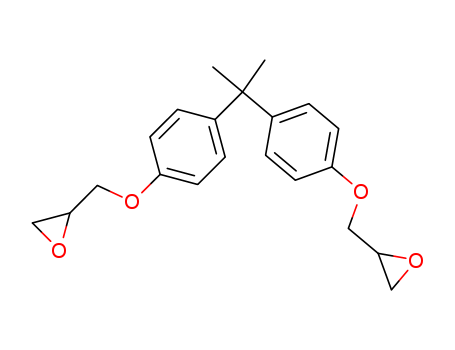
BISPHENOL A DIGLYCIDYL ETHER RESIN
- Name BISPHENOL A DIGLYCIDYL ETHER RESIN
- CAS 1675-54-3
- Purity 99%
Product Details
Manufacturer Sells Best Quality BISPHENOL A DIGLYCIDYL ETHER RESIN 1675-54-3 with stock
- Molecular Formula: C21H24O4
- Molecular Weight: 340.419
- Appearance/Colour: colorless or yellowish brown liquid
- Vapor Pressure: 3.66E-09mmHg at 25°C
- Melting Point: 40-44 °C
- Refractive Index: 1.5735
- Boiling Point: 487 °C at 760 mmHg
- Flash Point: 148.5 °C
- PSA: 43.52000
- Density: 1.168 g/cm3
- LogP: 3.56770
BISPHENOL A DIGLYCIDYL ETHER RESIN(Cas 1675-54-3) Usage
|
Production Methods |
The synthesis of the basic epoxy resin molecule involves the reaction of epichlorohydrin with bisphenol A, the latter requiring two basic intermediates for synthesis, acetone and phenol. Theoretically, the production of the bisphenol A diglycidyl ether requires 2 mol of epichlorohydrin for each mole of the phenol. Epoxy resins of higher molecular weight are obtained by reducing the epichlorohydrin/bisphenol A ratio. This reaction involves consumption of the initial epoxy groups in the epichlorohydrin and of some of the groups formed by dehydrohalogenation. |
|
General Description |
Odorless yellowish brown liquid. Sinks in water. |
|
Air & Water Reactions |
Oxidizes readily in air to form unstable peroxides that may explode spontaneously [Bretherick 1979 p.151-154, 164]. Insoluble in water. |
|
Reactivity Profile |
Epoxides, such as BISPHENOL A DIGLYCIDYL ETHER RESIN, are highly reactive. They polymerize in the presence of catalysts or when heated. These polymerization reactions can be violent. Compounds in this group react with acids, bases, and oxidizing and reducing agents. They react, possibly violently with water in the presence of acid and other catalysts. |
|
Health Hazard |
Contact with liquid irritates eyes. Prolonged or repeated contact with skin causes irritation and dermatitis. |
|
Fire Hazard |
BISPHENOL A DIGLYCIDYL ETHER RESIN is probably combustible. |
|
Biological Activity |
PPAR γ pure antagonist with micromolar affinity in 3T3-L1 and 3T3-F442A preadipocyte cells; selective over PPAR δ and PPAR α . Antagonizes the ability of rosiglitazone to stimulate transcriptional activity of PPAR γ . Acts as a PPAR γ agonist in an ECV304 cell line. Also produces PPARg-independent apoptosis of tumor cells via several mechanisms. Active in vivo . |
|
Contact allergens |
Most epoxy resins result from polymerization of bisphenol A diglycidyl ether (BADGE). Delayed hypersensitivity is caused by the low-molecular-weight monomer BADGE (Molecular Weight 340 g/mol), the dimer having much a lower sensitization power. This allergen caused contact dermatitis in six workers in a plant producing printed circuits boards made of copper sheets and fiber glass fabric impregnated with a brominated epoxy resin. It can be contained in adhesives. |
|
Biochem/physiol Actions |
PPARγ inhibitor that blocks rosiglitazone- and insulin-induced adipogenesis. |
|
Potential Exposure |
Diglycidyl ether of bisphenol A is used as a basic active ingredient of epoxy resins. |
|
Carcinogenicity |
In summary, a number of carcinogenicity studies involving the topical application of pure BADGE as well as EPON Resin 828 and other commercial BADGE-based resins have been carried out in experimental animals.Viewing the studies as a whole, the weight of evidence does not show that BADGE or BADGE-based epoxy resins are carcinogenic. |
|
Incompatibilities |
Easily oxidized in air; presumed to form unstable and explosive peroxides in storage. Incompatible with strong acids; strong oxidizers. |
|
Waste Disposal |
Dissolve or mix the material with a combustible solvent and burn in a chemical incinerator equipped with an afterburner and scrubber. |
InChI:InChI=1/C21H24O4/c1-21(2,15-3-7-17(8-4-15)22-11-19-13-24-19)16-5-9-18(10-6-16)23-12-20-14-25-20/h3-10,19-20H,11-14H2,1-2H3/t19-,20-/m1/s1
1675-54-3 Relevant articles
A starch based sustainable tough hyperbranched epoxy thermoset
Duarah, Rituparna,Karak, Niranjan
, p. 64456 - 64465 (2015)
With the growing concern of long term en...
Design and fabrication of a novel superhydrophobic surface based on a copolymer of styrene and bisphenol A diglycidyl ether monoacrylate
Liu, Jin-Qiu,Bai, Chong,Jia, De-Dong,Liu, Wei-Liang,He, Fu-Yan,Liu, Qin-Ze,Yao, Jin-Shui,Wang, Xin-Qiang,Wu, Yong-Zhong
, p. 18025 - 18032 (2014)
The copolymer of styrene and bisphenol A...
An in situ prepared photo-luminescent transparent biocompatible hyperbranched epoxy/carbon dot nanocomposite
De, Bibekananda,Kumar, Manishekhar,Mandal, Biman B.,Karak, Niranjan
, p. 74692 - 74704 (2015)
A photo-luminescent transparent biocompa...
HERBICIDE COMPOSITION COMPRISING CLOMAZONE AND USE THEREOF
-
Page/Page column 17-19, (2018/03/09)
A composition comprising a water-immisci...
1675-54-3 Process route
-
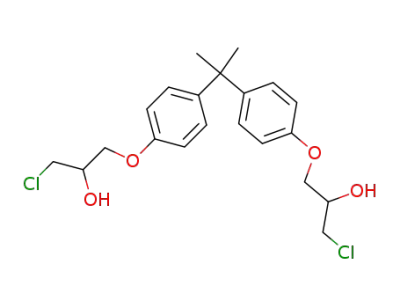
-
4809-35-2
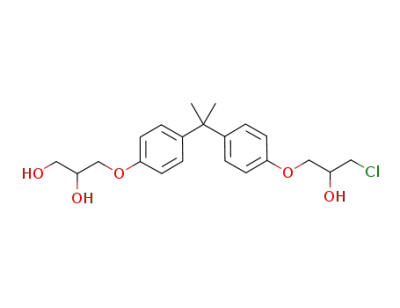
1-chloro-3-[4-[2-[4-(3-chloro-2-hydroxypropoxy)phenyl] propan-2-yl]phenoxy]propan-2-ol

-
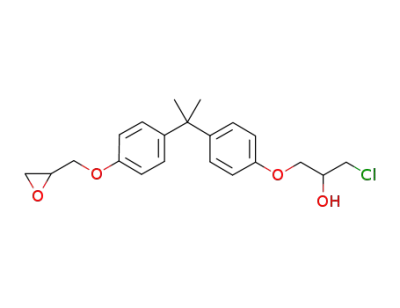
-
13836-48-1
racemic 1-chloro-3-(4-(2-(4-(oxiran-2-ylmethoxy)phenyl)propan-2-yl)phenoxy)propan-2-ol

-
-
C21 H25 ClO4
-
-
C23 H27 ClO5
-
-
C23 H28 O6
-
-
C24 H32 O7
-
-
227947-06-0
2-[4-(3-chloro-2-hydroxypropyloxy)phenyl]-2-[4-(2,3-dihydroxypropyloxy)phenyl]propane
-
-
C24 H32 O6
-
-
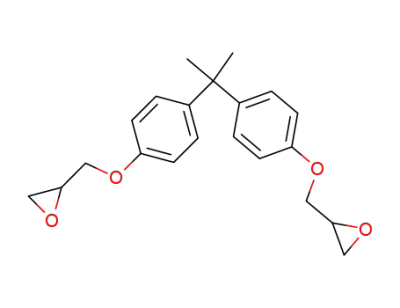
1675-54-3,25085-99-8,55774-85-1,91384-80-4
diphenylolpropane diglycidyl ether
-
-
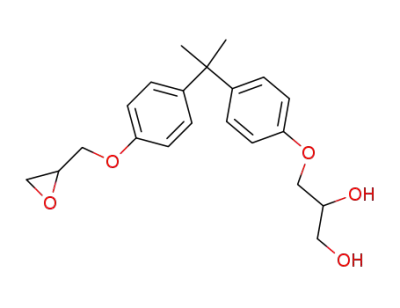
76002-91-0
2-[4-(2,3-epoxypropanyloxy)phenyl]-2-[4-(2,3-dihydroxypropanyloxy)phenyl]propane
| Conditions | Yield |
|---|---|
|
With
sodium hydroxide;
In
1-methoxy-2-propanol; water;
at 25 - 52 ℃;
for 2.5h;
|
-
-
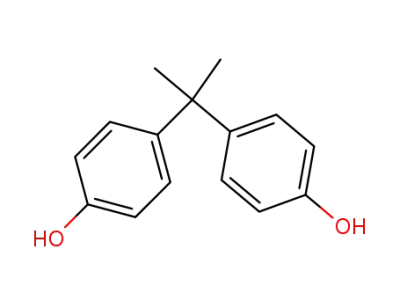
80-05-7
BPA
-
-
106-89-8,24969-06-0,13403-37-7
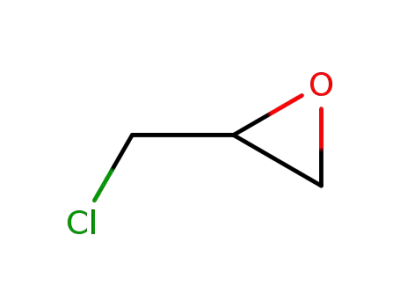
epichlorohydrin
-
-
1675-54-3,25085-99-8,55774-85-1,91384-80-4
diphenylolpropane diglycidyl ether
| Conditions | Yield |
|---|---|
|
With
tetrabutylammomium bromide; potassium hydroxide;
at 20 ℃;
for 12h;
|
98%
|
|
BPA;
With
sodium hydride;
In
N,N-dimethyl-formamide;
at 20 ℃;
for 0.25h;
Inert atmosphere;
epichlorohydrin;
In
N,N-dimethyl-formamide;
at 20 ℃;
for 18h;
|
72%
|
|
BPA; epichlorohydrin;
With
N-benzyl-N,N,N-triethylammonium chloride;
at 80 ℃;
for 12h;
With
sodium hydroxide;
In
water;
for 5h;
|
47%
|
|
With
sodium hydroxide;
|
|
|
With
sodium hydroxide;
In
water;
at 100 - 119 ℃;
for 3.75h;
Product distribution / selectivity;
|
|
|
With
sodium hydroxide;
In
water;
at 70 - 80 ℃;
for 12h;
|
|
|
BPA; epichlorohydrin;
at 100 ℃;
for 5h;
With
sodium hydroxide;
In
water;
at 60 ℃;
|
|
|
With
sodium hydroxide;
|
|
|
With
sodium hydroxide;
In
water;
at 80 ℃;
for 5.25h;
under 250 Torr;
pH=8.8;
Temperature;
Pressure;
pH-value;
|
|
|
With
sodium hydroxide;
|
|
|
|
|
|
sodium hydroxide;
|
1675-54-3 Upstream products
-
80-05-7
BPA
-
106-89-8
epichlorohydrin
-
4809-35-2
1-chloro-3-[4-[2-[4-(3-chloro-2-hydroxypropoxy)phenyl] propan-2-yl]phenoxy]propan-2-ol
-
3739-67-1
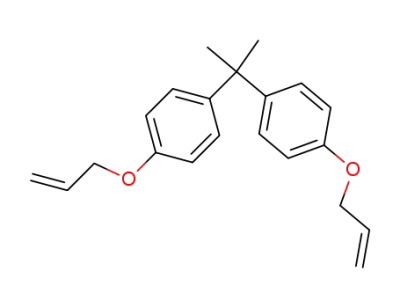
bisphenol A diallyl ether
1675-54-3 Downstream products
-
122118-96-1
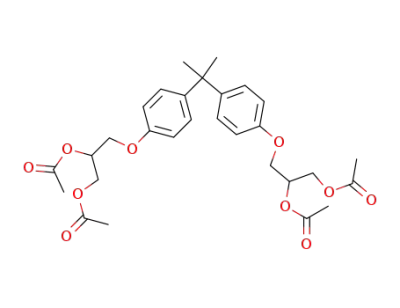
2,2-bis-[4-(2,3-diacetoxy-propoxy)-phenyl]-propane
-
21242-15-9
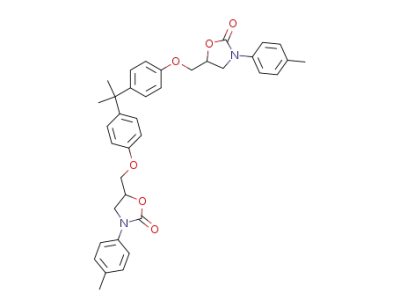
5,5′-(((propane-2,2-diylbis(4,1-phenylene))bis(oxy))bis-(methylene))bis(3-(p-tolyl)oxazolidin-2-one)
-
20844-45-5
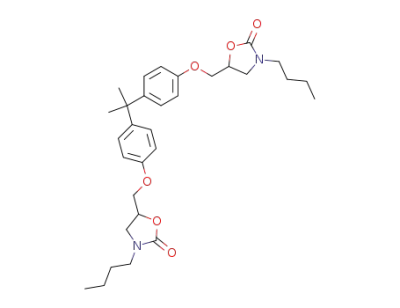
3,3'-dibutyl-5,5'-[4,4'-(1-methyl-ethane-1,1-diyl)-bis-phenoxymethyl]-bis-oxazolidin-2-one
-
81214-95-1
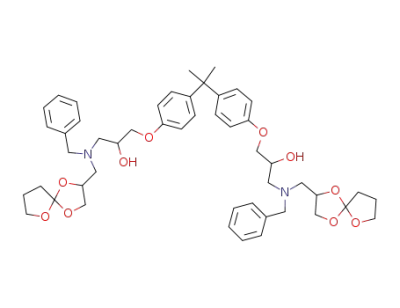
1-[Benzyl-(1,4,6-trioxa-spiro[4.4]non-2-ylmethyl)-amino]-3-{4-[1-(4-{3-[benzyl-(1,4,6-trioxa-spiro[4.4]non-2-ylmethyl)-amino]-2-hydroxy-propoxy}-phenyl)-1-methyl-ethyl]-phenoxy}-propan-2-ol
Related products
-
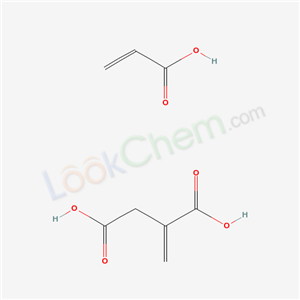 ACRYLID ACID ITACONIC ACID COPOLYMER
CAS:25948-33-8
-
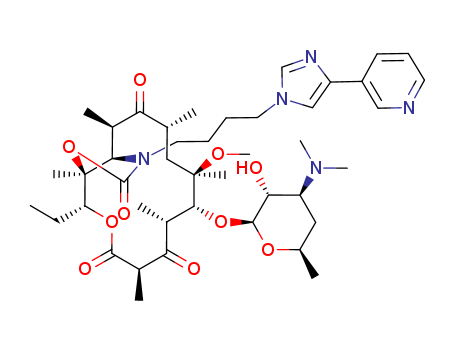 Telithromycin
CAS:191114-48-4
-
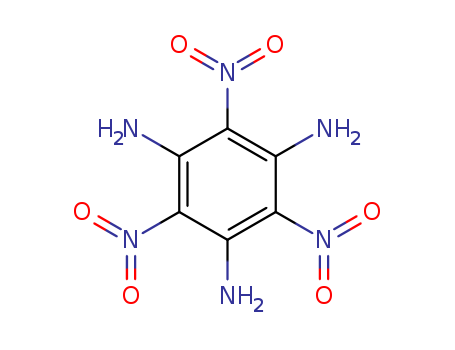 2,4,6-trinitrobenzene-1,3,5-triamine
CAS:3058-38-6
-